We ask a lot of our feet. We stand on them, walk on them, run on them if we’re fit enough, and expect them to support our full body weight for hours on end.
So anything wrong down there – from heel pain or ankle pain to warts, verrucae or problem toenails – can have an immediate effect on your freedom of movement and quality of daily life.
Our expert Podiatrist, Daniella is available at our Ringwood and Verwood clinics to support your journey.
To discuss your Podiatry needs with an experienced practitioner, call 01425 473093
Podiatry is the branch of medicine in which the podiatrist has been fully trained to assess, diagnose and perform treatment for ailments of the foot, ankle and lower limb.
Podiatry does not stop with the foot, as a podiatrist it is important to look at the case history as a whole as this can give us a better indication of why the problem has arisen for that patient and how we can then treat the problem and produce a treatment plan, to achieve the best possible outcomes for that patient.
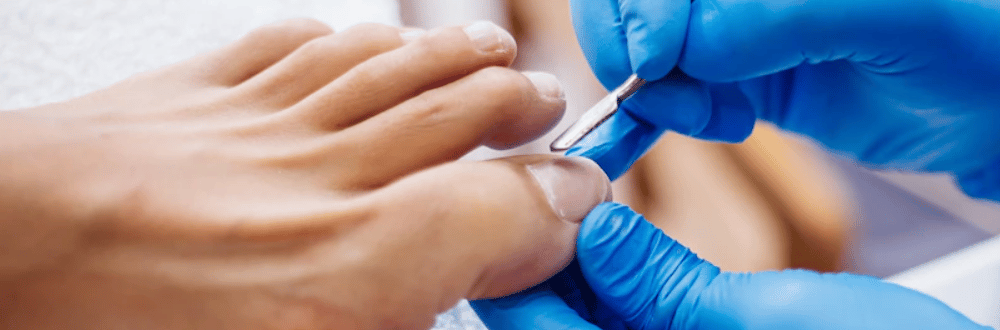
This involves the podiatrist removing your hard skin with a sterile scalpel blade (not recommended to be done by yourself at home). The podiatrist has had years of training to know how much skin can be safely removed without causing discomfort. Any corns will be removed by using the scalpel but with a different technique called enucleation. After both types of removal, the area(s) will be smoothed with a mechanical file. If any corns have been painful prior to treatment the area will be offloaded with a pad to prevent further pressure to the area, making it comfortable to walk on.
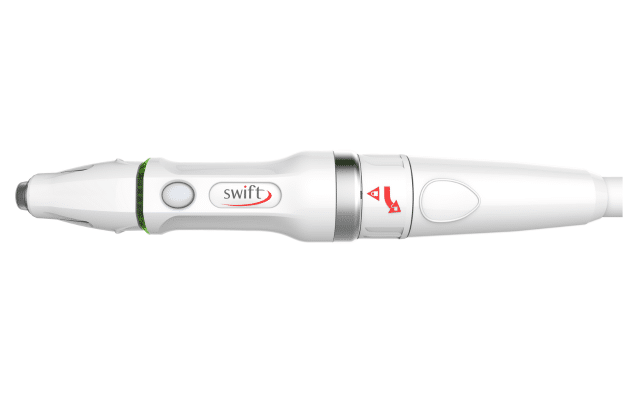
Available in the clinic, the Swift microwave verruca treatment causes water molecules in the infected verruca cells to become excited and release harmless heat shock proteins into the body to stimulate the immune system. This has a much better efficacy rate than standard acid or freezing treatments, which are still used despite being not as effective. The microwave is applied to the verruca to be treated and then the dose is delivered, this needs to be repeated multiple times to allow the best chance of resolution. Your podiatrist will work with you to achieve the best possible outcome.
Nail Surgery is a minor operation, performed under local anaesthetic (LA), in which your podiatrist removes the painful in-growing toenail. This can involve the removal of the entire nail (TNA) or part of the nail (PNA).
A TNA is the complete and permanent removal of the entire nail. This can look quite unnatural and can be distressing for the patient after the nail surgery as another nail will not grow again. Your podiatrist will try not to remove the entire nail unless it is completely unsalvageable or on one of the lesser toes which is less visible.
A PNA is the removal of the offending in-growing side(s) only, therefore leaving some part of the nail to make it look as normal as possible post operatively. Generally, at Body consultancy the Podiatrist will try to perform a PNA, thus aiming to leave some nail intact.
During the procedure, the offending spicule of nail is removed under LA, and the nail cells from where that piece of nail grew from will be destroyed, preventing it from growing back. The result is a slightly thinner nail with straighter sides, which looks relatively pleasing to the eye and grows back looking normal once healed post-surgery.
Exercises are often prescribed in combination with other manual therapy helping to aid the patient to continue daily tasks pain-free. Exercises are tailored to each patient dependent upon their lifestyle factors, age and ability to perform. During the appointment you will be shown how to perform an exercise and have a chance to perform it whilst the podiatrist is watching enabling you to know that it is being performed correctly therefore increasing mobility and aiding the road to recovery. It is quite common at this stage for the sports therapist and podiatrist to work closely during the rehab stage of your condition.
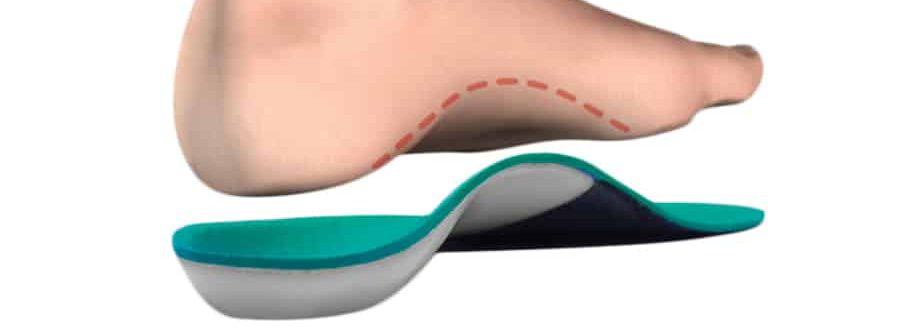
Foot orthoses are devices that are put into the shoe to support your foot and ankle. They come in a range of different materials and styles. We have ‘off the shelf’ orthoses for a short-term or ‘quick fix’ and new for 2023 will have the ability to create custom made orthoses that are more beneficial for ongoing support.
Depending on your pain or problem one pair may be better suited to you than the other. Foot orthoses can be designed for a particular function, for example offloading an area of discomfort, supporting and stabilising the foot to aid mobility or to relieve pain in the foot, ankle, knee, hip or lower back.
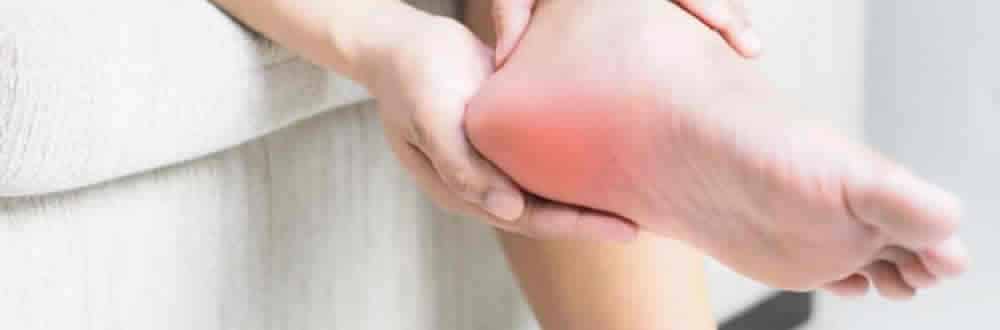
Plantar fasciitis is caused by an injury near to the attachment of the plantar fascia band to the heel bone. At each step, all of the body weight rests on one heel of the foot. If the foot is properly aligned this causes no problems. However if the foot is excessively pronated, the arch flattens causing abnormal stretching of the relatively inflexible plantar fascia, causing pain and inflammation at the attachment at the heel. This can be treated by the podiatrist by prescribing exercises and often also orthotics.
Diabetics are much more likely to experience problems with their feet, which if left untreated/uncared for can lead to in more serious cases amputations. Therefore it is important to get them checked by a health professional (Podiatrist/Foot health Practitioner/Nurse/GP) at least once per year. Diabetes can affect the blood supply to the feet making it harder for a person to heal if they injure themselves, also nerve supply can be affected if the sugar levels in the body are not maintained at a sensible level. Diabetics need to make sure they are cutting their nails correctly to avoid ingrown nails and avoid infections. We provide a professional nail cutting service here at body consultancy to take your mind off doing those tasks. It is also imperative that diabetics check their feet at least once per day to ensure nothing goes wrong, and they should be applying a foot cream once a day to keep skin healthy.
“Daniella took excellent care of my husband’s in-growing toenail. After the initial consultation at Verwood he was booked in for the op at Ringwood within 3 weeks. He has had several of these ingrown toenails and he says it’s the first time the actual op has been pain-free.”
Kay Eyre
“Ringwood Body consultancy, I went to see Daniella to have my feet sorted.. On arrival felt very comfortable, friendly atmosphere and, well a week on from my treatment my feet are still feeling amazing..
Would definitely recommend, having had very painful corns and hard skin.. Thank you Daniella it was a hard job for you, desperately needed doing … Will definitely be returning..”
Tina Hayward
“I have seen Daniella for both normal podiatry appointments and to remove two in-growing toe nails under a local anaesthetic. In all cases the service was excellent and I recommend Daniella without reservation. The Verwood and Ringwood centres are both pleasant places to be and all of the staff I have dealt with have been, polite, professional and helpful.”
We believe in working with the whole person – not just the painful area. So we’ll spend time really understanding not only your current symptoms but your daily activities, interests, experiences and goals.
We’ll advise you on what needs to change in the way you, move and hold yourself so that your problem doesn’t re-occur. We’ll help you build new habits to support your continued progress to full mobility and movement.
This ongoing phase is usually especially important for conditions we refer to as chronic (over 6 months), sub-acute (over 3 months) or acute (last few weeks) with significant re-occurring previous episodes.
Have a question? You’re not alone. Here are some of the most common queries we hear — designed to give you clarity, reassurance, and confidence before booking your appointment.
How often should diabetics see a podiatrist?
This depends on the 'risk' level. At your intial appointment the podiatrist will perform a nerovascular assessment and assess your risk status. Low risk - assessment at least annually, Medium risk - assessment approx every 3-6months, High Risk - assessment approx every 6-8weeks this is guidance from the national insitute for health and care excellence although if your risk status is low you can have treatment more regularly than this.
Can foot pain go away on its own?
Some foot pain will resolve alone, however if you have been experiencing pain for longer than 6 weeks it is important you get a diagnosis and treatment plan from a qualified Podiatrist
Are foot problems just part of getting older?
Unfortunately, Yes foot problems can occur as we age due to elasticity in our skin reduces and thins, years of wear and tear on the joints can cause pain, however not all hope is lost our Podiatrists can help with maintaining your feet to a comfortable level - read some of our 5 star reviews for yourself.
Do you offer Podiatry appointments at evenings and weekends?
Yes, we offer a variety of appointments days and times to be flexible to suit most people, we work until 8.30pm weekdays and have Saturday morning clinics 8am-12pm
Do you offer Podiatry Services in Verwood?
Yes we have clinics in both localities of Ringwood and Verwood, our Podiatrists work out of both clinics to be able to offer a variety of days/times to suit you.
Do you offer Podiatry Services in Ringwood?
Yes we have clinics in both localities of Ringwood and Verwood, our Podiatrists work out of both clinics to be able to offer a variety of days/times to suit you.
Is Podiatry treatment painful?
In most cases no podiatry treatment is not painful, however for some more invasive treatments like nail surgery or verruca treatment these can be a little uncomfortable during the process but after the treatment is completed most people do not have any residual pain or discomfort.
Orthotics
Foot orthoses are devices that are put into the shoe to support your foot and ankle. They come in a range of different materials and styles. We have ‘off the shelf’ orthoses for a short-term or ‘quick fix’ these can be modified and altered to give you longer lasting support. They can be as beneficial as fully custom-made orthoses but offered at a more reasonable price. Allowing you option to purchase multiple pairs to reduce the need for swapping between shoes you can have multiple pairs fitted into various shoes.
Nail Surgery
Nail Surgery is a minor operation, performed under local anaesthetic (LA), in which your podiatrist removes the painful in-growing toenail. This can involve the removal of the entire nail (TNA) or part of the nail (PNA).
I am diabetic and I need to look after my feet, can you help
Yes definitely. We provide full diabetic foot care in both our clinics, this will include a neurovascular assessment, then routine care, alongside after care advice.
Nail Surgery
Nail Surgery is a minor operation, performed under local anaesthetic (LA), in which your podiatrist removes the painful in-growing toenail. This can involve the removal of the entire nail (TNA) or part of the nail (PNA).
Traditional Verruca Treatment
Traditional treatment methods for verruca removal include the use of caustic agents such as acid, liquid nitrogen, a nitric-zinc complex or silver nitrate. With all these methods the podiatrist will apply treatment diligently and you will require follow up care to check on the progression of the treatment. These treatments require repetitive care due to the caustic action and the breakdown they can cause to the skin. All this will be discussed with you during your appointment and if used in the correct way can be an alternative method rather than the Swift treatment.
Swift Verruca Treatment.
Available in the clinic, the Swift microwave verruca treatment causes water molecules in the infected verruca cells to become excited and release harmless heat shock proteins into the body to stimulate the immune system. This has a much better efficacy rate than standard acid or freezing treatments, which are still used despite being not as effective. The microwave is applied to the verruca to be treated and then the dose is delivered, this needs to be repeated multiple times to allow the best chance of resolution. Your podiatrist will work with you to achieve the best possible outcome.
Do you do hard skin and corn removal?
This involves the podiatrist removing your hard skin with a sterile scalpel blade (not recommended to be done by yourself at home). The podiatrist has had years of training to know how much skin can be safely removed without causing discomfort. Any corns will be removed by using the scalpel but with a different technique called enucleation. After both types of removal, the area(s) will be smoothed with a mechanical file. If any corns have been painful prior to treatment the area will be offloaded with a pad to prevent further pressure to the area, making it comfortable to walk on.
Can I come in for regular appointment?
Yes, absolutely. Most people return for regular treatment to help maintain their nail & skin care, to keep comfortable and active.
How long will my appointment last?
The first initial consultation is booked for 45 minutes, then follow up appointments are 30 minutes. If you require nail surgery we allow extra time for this.
Do I need to be referred to Podiatry?
No, you are able to make an appointment for a consultation directly.
Are you able to treat children?
Yes, of course. We are able to treat and offer advice to everyone, including children.
How should I prepare for my appointment?
Please ensure all nail varnish is removed prior to the appointment, to ensure the practitioner can see the nails properly. Also bring along/wear any footwear you would like assesed. Also, a list of your current prescibed medication.
What should I expect on my first visit?
The practitioner will perform a thorough lower limb assessment. This will include a foot pulse check, including Doppler scan. Thoroughly reviewing your feet to see if there are any cause for concern, such as infection. Then prescribing the best treatment plan that fits your needs.
What is the difference between a Podiatrist & Foot Health Practitioner?
Nothing! Podiatrist is the modern term but both titles are recognised & are able to treat in the same way.
What is the difference between a Chiropodist & podiatrist?
Nothing! Podiatrist is the modern term but both titles are recognised & are able to treat in the same way.
What is Podiatry?
This is a term used to describe a specialism that is dedicated to the diagnostic & treatment of lower limb conditions, that mainly affect the ankle & feet.
This site uses cookies to provide you with a better and safer user experience. By navigating the site, you agree to the use of cookies to collect information on your visit.